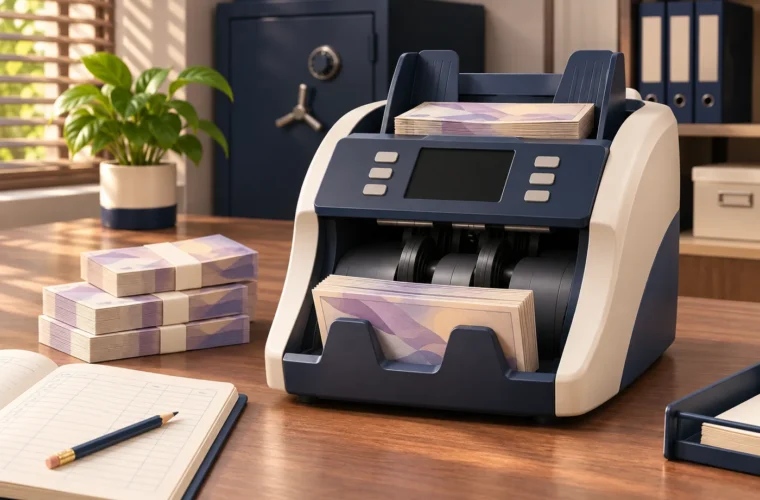

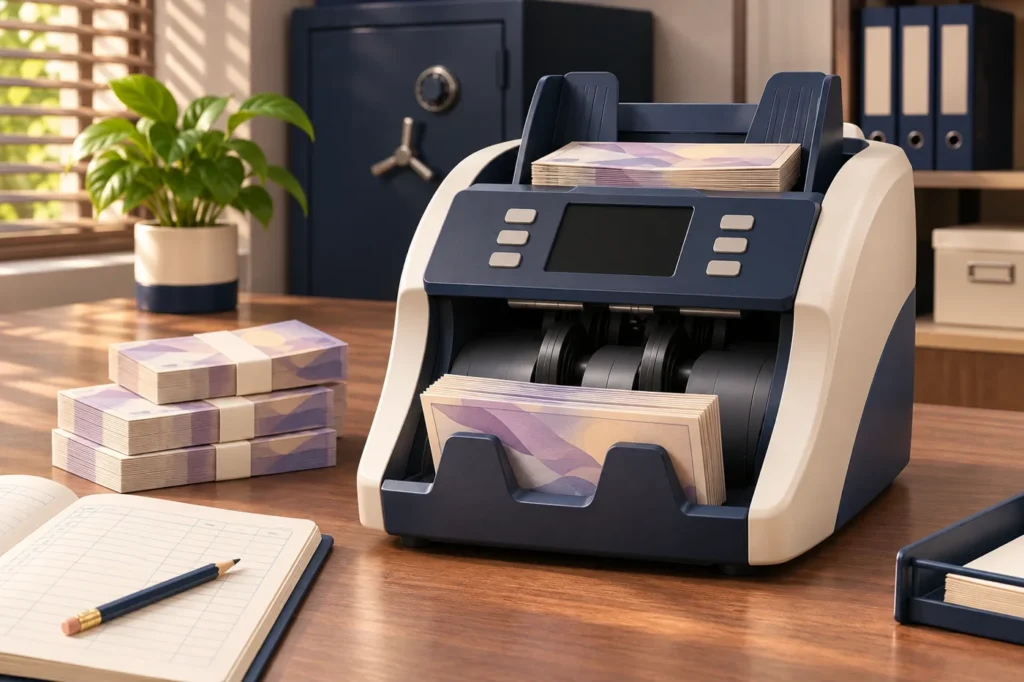
A tray of mixed banknotes can lead to several different requests: count the pieces, calculate their total value, separate denominations or prepare a record for the next person. Those jobs are related, but they are not interchangeable. A buyer needs to specify which result the business expects.
Start by describing the money as it reaches the counting desk. Identify the currency, whether denominations are already separated and whether batches from different tills must remain distinct. That description is more useful than asking for a machine that simply handles everything.
Four tasks that should be named separately
Piece counting establishes how many notes pass through the machine in the selected mode. Denomination recognition identifies note values where the configuration supports it. Mixed-value counting uses the relevant recognition functions to calculate a total. Physical sorting adds another requirement concerning where notes are collected.
Ask the supplier to connect each required result to a specific supported function. Product-family names and general terms such as advanced counting do not establish what a particular unit will do. Record the exact model, software and currency configuration in the purchase brief.
Keep ownership separate from denomination
Mixed denominations do not justify mixing cash from different sources. If a business reconciles individual tills or shifts, retain that identity throughout counting. A combined total can be mathematically correct while being difficult to reconcile against separate records.
Label each batch and define when its result is recorded. Specify how the operator clears or starts the next job. The procedure should let a reviewer understand what the displayed total includes without relying on somebody remembering the order in which notes were loaded.
Confirm the currency and configuration
When evaluating a currency counting machine in Sri Lanka, ask for written confirmation of the intended currency and required modes. Clarify whether setup, software changes or optional functions are needed. A capability mentioned for a series may depend on the configuration supplied.
Use authorised representative batches in a demonstration. Establish the expected results independently, then observe the full task. Look at loading, display interpretation and the final record, not just how quickly notes move through the machine. Ask an intended operator to repeat the procedure with guidance.
Make rejected or uncertain notes visible
Ask what happens when a note requires attention. Establish whether it is included in the displayed result and how the operator should continue. An alert needs the response specified by the equipment guidance and the organisation's cash-handling procedure. It should not be treated as a final conclusion about a note's authenticity.
Keep unresolved items linked to their batch. Repeatedly feeding a note without understanding the message can obscure what has happened. Staff need a clear route for escalation and a record that distinguishes completed counting from items still awaiting a decision.
Follow the result into the next step
If denomination summaries or electronic reports are required, have those outputs demonstrated. A connector or display alone does not prove that the requested report is available. Check that the person receiving the cash can understand the result and any exceptions.
Take this workflow to Aiken when discussing a suitable configuration. The purchase should support the complete handover: identifiable cash, a clearly understood total and a record that remains useful after the machine stops.