
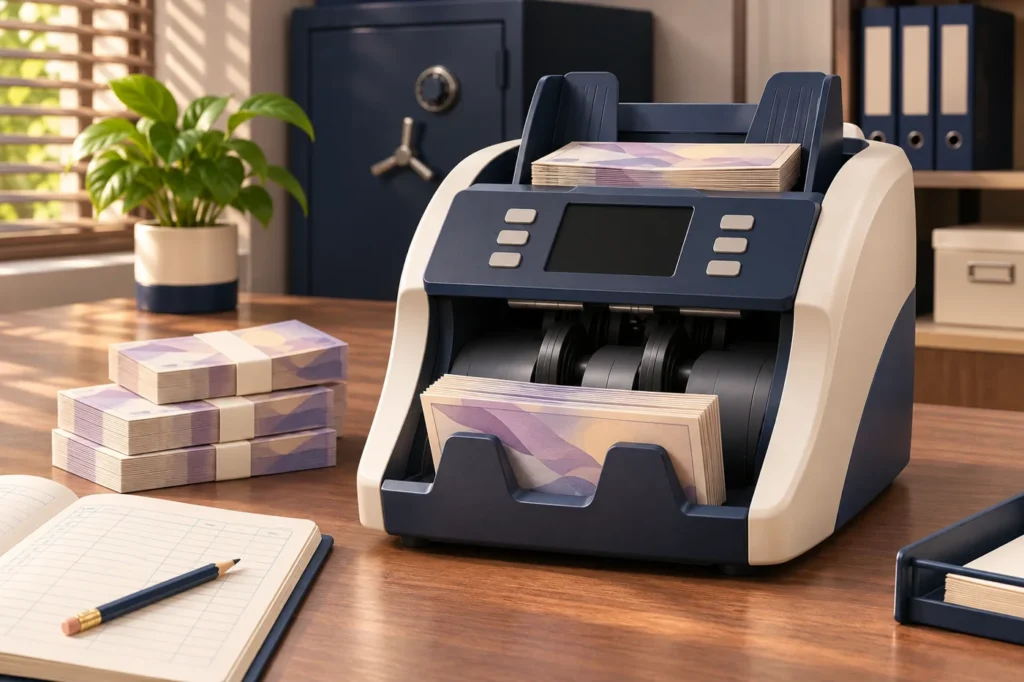
A counting machine can be fast while the counting desk remains slow. Staff may wait for batches, separate notes, resolve interruptions or copy results into another record. Before buying more capacity, identify which part of the process is actually holding up the work.
The purchase case should begin with a few representative observations. Record the workload during ordinary periods and at closing time. Keep the exercise simple enough that the information can be collected accurately without disrupting the cash-handling procedure.
Count batches as well as notes
Record how many batches arrive, their approximate sizes and whether notes are already sorted. Note the currency and required output. Ten small batches may create a different workload from one large batch because preparation and recording repeat each time.
Keep sources identifiable while measuring. Do not combine tills or departments to simplify the trial if the business normally reconciles them separately. The measurement is useful only when it resembles the process that will continue after purchase.
Find the busiest part of the day
Look at when cash reaches the desk, not just the daily total. Several tills closing together can create a queue even when the average daily workload seems modest. Note who waits, what they are waiting for and whether another task can proceed meanwhile.
Consider whether clearer handovers or a different sequence would reduce the delay. Equipment may help, but it should address a defined constraint. If recording is the slowest stage, a faster counting cycle alone may have a smaller effect than expected.
Compare a complete cycle
Use an authorised demonstration to time preparation, loading, counting, exception handling and recording. Treat the result as an observation under those conditions. A headline notes-per-minute figure does not include all the surrounding work.
When comparing cash counting machine price in Sri Lanka, ask how the proposed configuration supports your full cycle. Verify the required functions and currency support. A higher specification has value when it solves a real task, rather than merely providing a larger number in a brochure.
Explain the benefit without overstating it
Time released can be valuable even when it does not directly reduce payroll spending. Staff may finish closing earlier, spend less time waiting or complete another task. State which benefit the business expects and avoid automatically converting every minute saved into cash savings.
For example, saving a hypothetical ten minutes on each of six daily batches releases an hour of staff time. That is an illustration of the arithmetic, not an equipment performance claim. The operational value depends on what those staff can usefully do with the time.
Decide where the equipment belongs
A shared station needs suitable access and a clear batch sequence. Separate stations may reduce movement but add equipment, training and maintenance requirements. Compare the arrangement against observed peaks and the organisation's cash controls.
Prepare a brief with normal demand, peak demand and the proposed operating plan. Discuss it with Aiken alongside the quotation, setup and support terms. The strongest purchase case explains the work that will improve and shows the observations behind that conclusion.