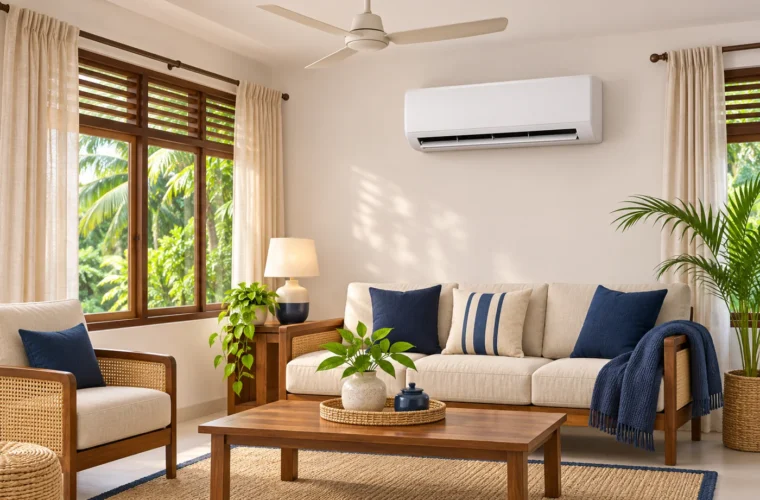

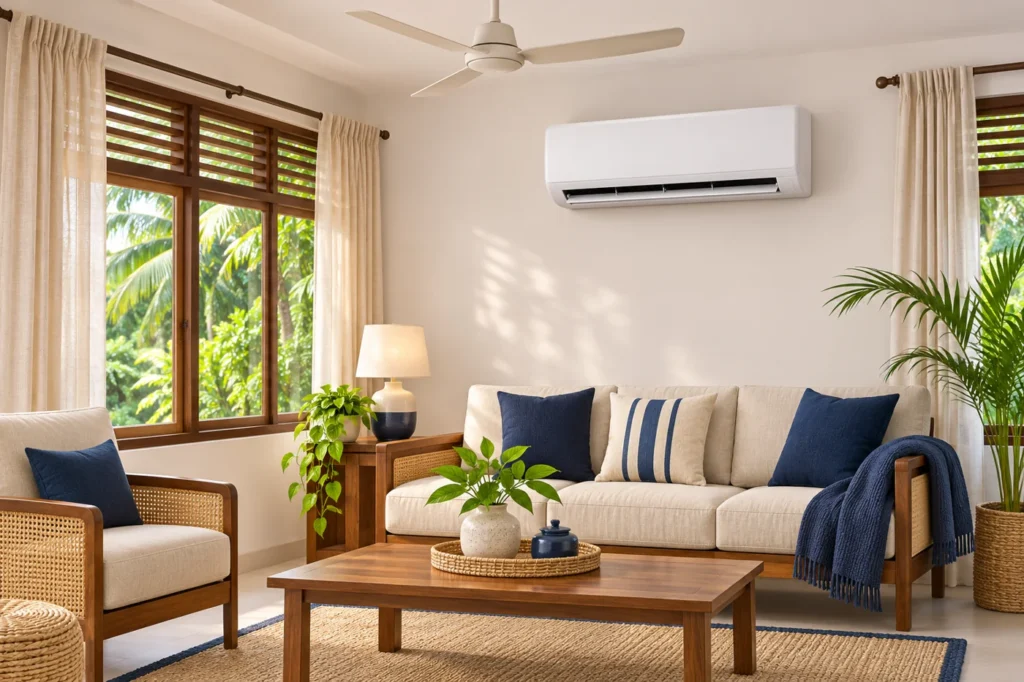
An inverter label tells you something about the equipment's control technology. It does not tell you the complete installed cost, how many hours your household will run it or what the electricity bill will become. Those questions require a comparison of the exact models and the way they will be used.
A useful comparison can fit on one page. Put the room requirement at the top, then record the evidence for each option underneath. Keep uncertain figures clearly marked so they do not quietly become facts during the buying discussion.
First make the room requirement identical
Both proposals should serve the same assessed cooling area and operating conditions. Check the capacities and ask why each is suitable. Comparing different capacities without explaining the difference can make a technology comparison misleading from the start.
Record the model codes in full. Efficiency information, controls and operating ranges can vary within an equipment family. A brochure for one version should not be used to support another simply because the indoor units look alike.
Separate the invoice from the running estimate
The invoice is a quoted amount. Future electricity use is an estimate with assumptions. Keep them in separate parts of the comparison. Ask whether the equipment, delivery, mounting, pipework, drainage and electrical requirements are included in each price.
Anyone checking air conditioner price in Sri Lanka should also ask what usage assumptions support a running-cost claim. The relevant question is how suitable options compare under similar conditions, not whether one label guarantees a fixed reduction for every room.
Try more than one usage pattern
A bedroom used each evening has a different schedule from a spare room cooled occasionally. Write down likely hours before considering a possible operating-cost difference. Where the estimate is uncertain, examine a lower-use and a higher-use case instead of presenting one precise forecast.
A simple illustration can help explain the calculation. If an option hypothetically costs Rs. 30,000 more and saves Rs. 10,000 a year under a stated estimate, the simple payback would be three years. These are example amounts, not market prices or promised savings. Changes in use, tariffs and maintenance can change the result.
Read the ownership terms separately
Check written warranty coverage and any conditions attached to it. Identify the process for arranging service and distinguish confirmed charges from estimates. Do not assume that two quotations include the same support because both mention a warranty.
Review everyday operation too. The controls should suit the people using the room, and the installation should allow the care described in the manual. Useful efficiency depends on a suitable working arrangement as well as the equipment specification.
Keep the reason for the final choice
Write one sentence explaining what the additional expenditure buys and why that matters to your room. If the answer rests on a saving that nobody can substantiate, obtain clarification before ordering. If the extra function has a clear practical use, record that instead.
Discuss the comparison with Aiken using the same room brief and current quotations. The decision becomes easier to review when the installed cost is clear and every operating estimate shows the assumptions behind it.