
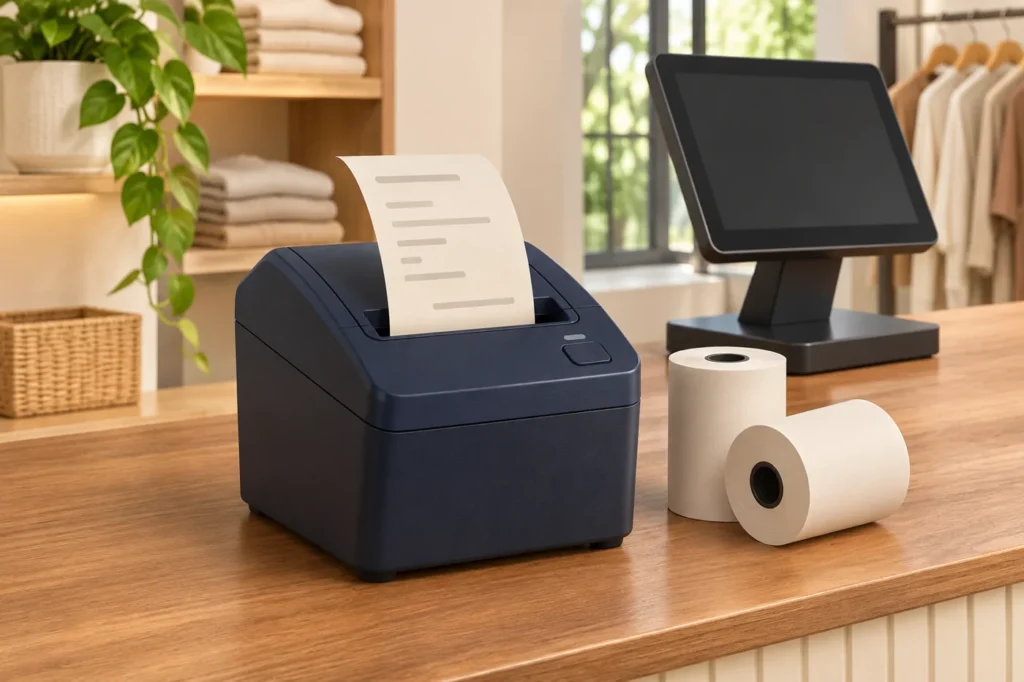
A receipt printer without an ink cartridge still has operating costs. Paper, repeat jobs and routine care remain part of the budget. The useful starting point is not an assumed number of receipts per roll, but a short record of what the counter actually prints.
Choose a representative trading period. Record transactions, roll replacements and reprints. Note any unusually long receipts or special activity. That gives the business a practical basis for comparing equipment and reviewing paper use.
Confirm the printing method and paper
Direct thermal equipment uses suitable heat-sensitive paper. Check the exact paper width, roll dimensions and other media requirements for the selected model. Do not choose supplies from the broad category name alone. Thermal transfer equipment has a different consumable arrangement.
Keep the approved paper specification where the person ordering supplies can find it. A low-priced roll is not useful if it does not fit or produces unsuitable output. Review representative receipts and follow the equipment and paper guidance rather than judging compatibility by appearance.
Connect roll use with transaction length
Two counters with the same number of sales may use different amounts of paper. Item lists, receipt formatting and blank feed can change the length of each print. Extra copies and legitimate reprints also contribute to consumption.
When comparing thermal printer price in Sri Lanka, combine the equipment quotation with an estimate based on the business's output. Avoid treating one roll as a guaranteed quantity of receipts. Measure actual usage and refine the estimate once the proposed arrangement is in regular use.
Review the layout carefully
Look for unnecessary repetition or excessive blank spacing. Ask the responsible application team to review potential changes while preserving the information the business needs. A shorter receipt that becomes difficult to read is not necessarily an improvement.
Test the revised layout with short and long transactions. Check longer descriptions and the placement of totals. Keep the approved version documented so individual counters do not gradually develop different layouts through informal troubleshooting.
Find the reason for repeat printing
Record why a reprint was needed where the cause can be established. Paper handling, an application interruption and an operator action require different responses. Replacing hardware will not automatically resolve an unclear procedure.
Make legitimate reprints recognisable through the business's approved process. Staff should know when to request a copy and how it relates to the original transaction. The aim is to reduce avoidable output while preserving a controlled way to provide the copies that are genuinely needed.
Store supplies and maintain the printer as directed
Follow the paper supplier's guidance concerning heat, light and moisture. Consider record retention separately from the act of printing, since direct thermal images can be affected by their storage conditions. Use the organisation's approved recordkeeping arrangements for information that must remain available.
Use only the printer's authorised cleaning methods and keep loading access clear. Identify which tasks staff may perform and which require technical assistance. Ask Aiken to confirm suitable media and support arrangements for the selected equipment.
Compare similar trading periods when reviewing a change. A quieter week can reduce roll use without proving that a new layout helped. Keep transaction volume and typical receipt length beside consumption so the conclusion reflects usable output, not paper purchases alone.