
A ribbon can be inexpensive while the printing process is wasteful. Misaligned forms, repeated jobs and poor copies consume materials without completing the task. A useful cost review therefore starts with a definition of acceptable output.
For a business form, that may mean readable fields, correct alignment and every required copy being usable. Write down the standard before comparing costs. Otherwise two printers may appear to produce the same quantity while delivering different amounts of useful work.
Measure accepted output
Record the forms the business actually uses over a representative period. Separate document types where size, print density or copy count differs substantially. Note regular peaks as well as ordinary demand so the estimate reflects the working pattern.
Track discarded forms and reprints separately. Where the reason is known, record it: alignment, damaged stationery, incorrect content or another cause. This makes it possible to distinguish a printer problem from a setup or application issue.
Read ribbon figures in context
Confirm the correct ribbon for the exact printer model and check its quoted cost and availability. A published yield has test conditions. It should not be converted directly into a guaranteed number of your own forms without considering the amount of printing involved.
Track actual replacements alongside workload to build a practical estimate. Keep the result approximate when conditions vary. A simple cost per accepted form is more useful than a highly precise figure built from an assumed yield and an unrepresentative week.
Include the stationery
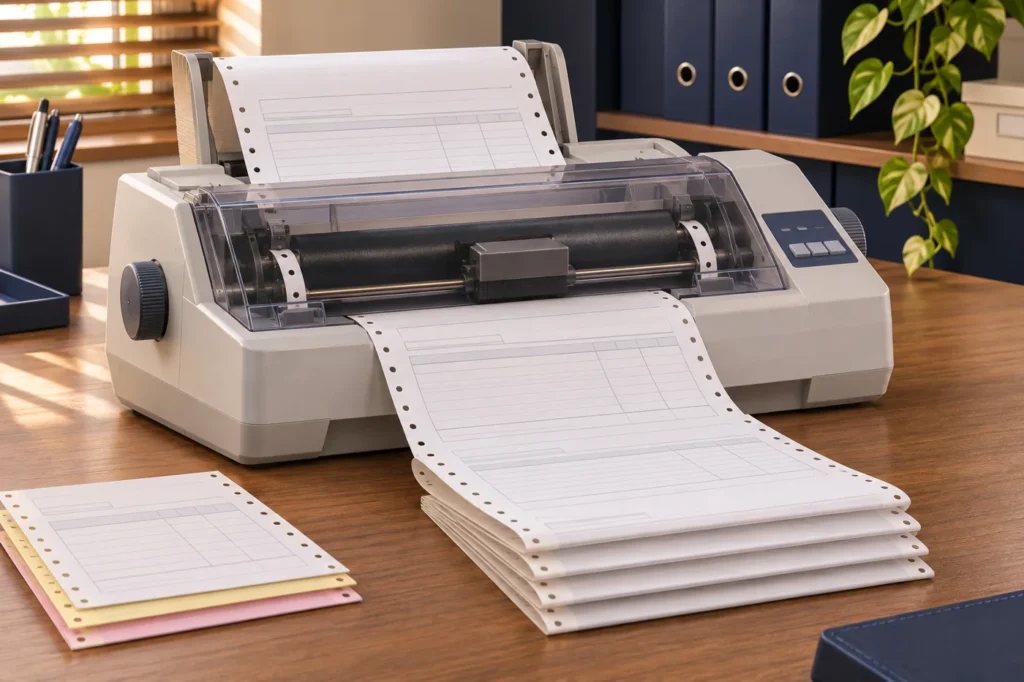
Multipart sets and continuous forms belong in the operating budget. Confirm that their dimensions and construction are supported by the proposed equipment. A lower stationery price does not help if the media causes handling problems or leaves required copies difficult to read.
When comparing dot matrix printer price in Sri Lanka, put the initial quotation beside a realistic allowance for consumables. Include accessories and setup needed to produce the approved output. Keep estimates separate from confirmed supplier amounts.
Count the work around a form change
If staff regularly change stationery, observe loading, alignment checks and the return to approved settings. Document a consistent method. A change that appears small at purchase can become a recurring task when several form types share one printer.
Review wasted forms before deciding that replacement is the only answer. Better configuration, clearer instructions or suitable media may address part of the problem. Equipment spending should respond to an identified cause rather than an unexplained pile of rejects.
Allow for care and interruptions
Follow the manual's routine care guidance and keep relevant service records. Obtain the written warranty and support arrangements for the proposed equipment. Distinguish quoted charges from estimated internal effort, and avoid attaching an unsupported fixed loss to every interruption.
Define an appropriate alternative process for essential documents when printing is unavailable. The operating impact depends on the business and the work that can continue through other approved arrangements.
Take the demand profile and sample forms to Aiken when discussing suitable equipment. Review the estimate again after deployment using actual accepted output and replacements. The useful comparison is the cost of documents the business can use, supported by a process staff can operate consistently.