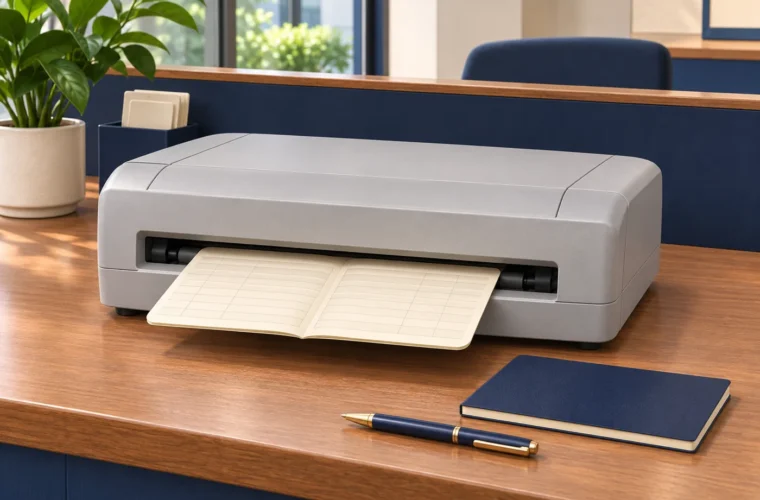

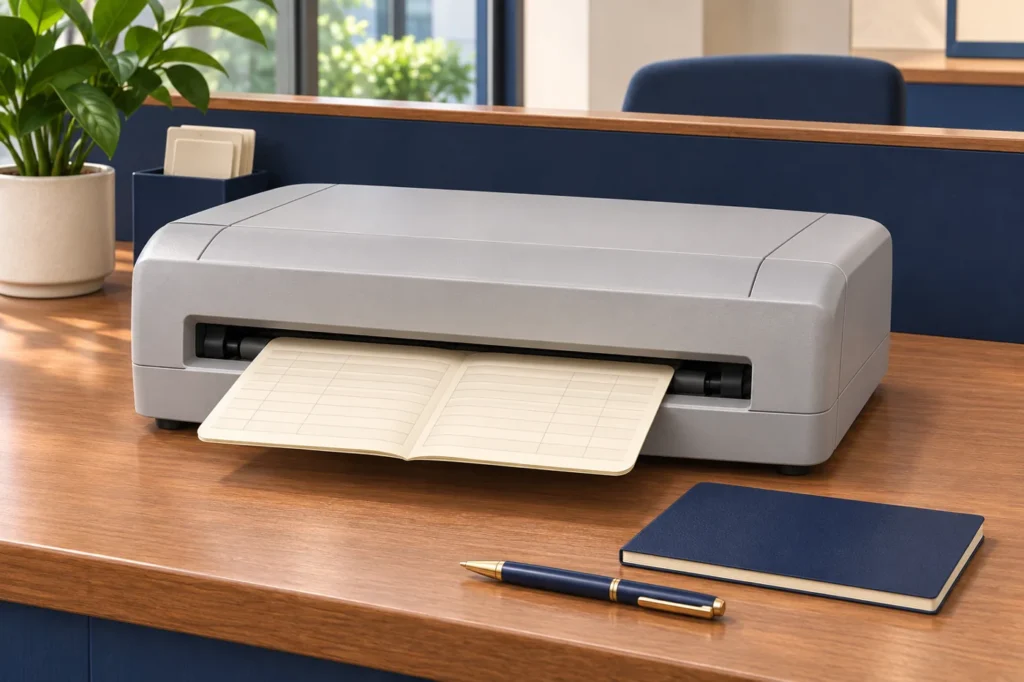
The old passbook printer may be familiar even when it is no longer dependable. Staff know how the book feeds, where entries align and what a routine message means. A replacement changes part of that working arrangement, so the changeover deserves a plan.
Begin with the process you need to preserve. Record the host environment, application, supported books and required output. Then identify what can change and which parts must continue to work in the same way.
Capture the existing arrangement
Keep the model details and relevant settings through the organisation's approved documentation process. Include the interface, driver or emulation information and any application configuration that affects printing. Ask the technical owner to review the record rather than relying solely on an operator's recollection.
Retain non-sensitive examples of acceptable output. These provide a practical reference for alignment, character rendering and field positions. They also help explain the requirement to someone who has never used the old equipment.
Choose the replacement against the task
Confirm the proposed printer's support for the host, software and physical media. A familiar connector or similar product description is not enough. Ask which configuration changes, accessories or setup work are required and have them included in the proposal.
When comparing passbook printers in Sri Lanka, separate the equipment price from the cost of establishing a working counter. Include configuration, installation and operator familiarisation where needed. Confirm written warranty and support terms for the exact equipment being supplied.
Prepare a representative test set
Use authorised sample books and test data that reflect ordinary work. Include relevant field positions, characters and page conditions supported by the workflow. Compare the new output with the approved reference rather than judging only whether something printed.
Have technical staff and counter staff review the same results. One group can confirm the configuration while the other checks practical readability and handling. Record unresolved issues and avoid treating a partial success as acceptance of every required task.
Decide the changeover window
Choose a time that allows installation, testing and staff guidance before the printer is relied on for normal service. Identify who can approve the result and who will coordinate any further work. Do not make a busy counter the first real test environment.
Agree on an approved alternative process if the replacement is not ready. That arrangement should be practical for the business and preserve its normal controls. The plan is more useful when responsibilities are clear before an interruption occurs.
Teach the differences
Show operators any changes in loading, controls, messages and recovery. Use the exact equipment guidance. Familiarity with the previous printer does not establish familiarity with a new model, even if both perform a similar role.
Keep the tested configuration and accepted sample output with the purchase records. If settings later change, document the reason and review the affected output. This gives future support staff a known working reference.
Discuss the changeover brief with Aiken before placing the order. A successful replacement is a printer that works within the required process, with staff prepared to use it and a clear record of the arrangement that was accepted.